Budapest: The City of 118 Thermal Springs
Gushing over 70 million liters of mineral-dense geothermal water each day, Budapest is an incomparable thermal metropolis where 16th-century Ottoman cupolas meet grand Neo-Baroque outdoor palatial basins.
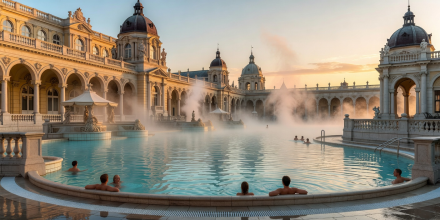
The Three Pillars of Budapest Thermal Culture
Budapest’s thermal network sits directly over a major geological fault line along the Danube river. This unique tectonic placement yields a vast spectrum of mineral baths across historical eras:
- Széchenyi Baths (1913): Europe’s largest medicinal bath complex with 18 indoor and outdoor thermal pools set within an imposing neo-Baroque yellow palace in City Park. The main outdoor pool maintains 38°C steam year-round.
- Gellért Thermal Baths (1918): Renowned for its Art Nouveau glass vaults, turquoise Zsolnay ceramic mosaics, marble columns, and soothing carbonic acid spring pools.
- Rudas Baths (1550): An authentic 16th-century Turkish hamam featuring an octagonal thermal pool crowned by a ten-meter stone dome with stained glass skylights, plus a panoramic modern rooftop pool overlooking the bridges of the Danube.
Therapeutic Balneology Indications
Rich in calcium, magnesium, hydro-carbonate, sodium, sulfate, and metaboric acid, these waters are officially classified as medicinal balneotherapy for degenerative spinal issues, chronic arthritis, and vascular revitalization.
Visiting Etiquette & Local Protocols
Bring swim footwear and flip-flops, dark swimwear, and a swim cap if you intend to swim laps in the dedicated swimming basins. Morning hours between 07:00 and 10:00 offer serene, uncrowded soaking sessions.